Thứ Năm, 25 tháng 6, 2015


European Women’s Basketball Championship - 11 to 28 June 2015

image


Magyar Posta issued a special stamp to mark the Women’s Basketball European Championship. The design of the special stamp features a basketball shoe and a high-heel shoe, referring to the diversity of sportswomen, and the national flags of the host nations. The issue was released on the 4th of June.This is a beautiful stamp with a nice design depicting  a basketball shoe and a woman’s shoe – giving a symbolic look of Women’s Basketball Championship.

image

Hungary and Romania are jointly hosting the 35th European Women’s Basketball Championship between 11 and 28 June 2015.The matches are being played in five Hungarian and three Romanian cities.

Twenty teams including the Hungarian national side are playing in the European Championship. The winning team will go to the 2016 Olympic Games and the teams in the next four places will compete in the Olympic qualifying tournament. Hungary will vie with the defending champions Spain as well as Slovakia, Lithuania and Sweden in the MKB Arena in Sopron for a place in the semifinals.

New Special Cover 

Celebrations of Sri Ahobila Mutt released - 22nd June 2015 - Srirangam

image


The 60th birthday of the 46th Azhagiyasingar, Sri Ranganatha Yatheendra Mahadesikan, was celebrated as Shashtyabdha Poorthi Mahotsavam with a 5-day event from 18th June to 22nd June 2015 at Srirangam. On the occasion a Special Cover and My Stamp were released by Shri J.T. Venkateswarlu, Post Master General, Tiruchirappalli region which were received by Shri Parasaran, Member of Rajya Sabha. S. Rajagopalan, Chief Executive Officer of the Mutt and several devotees were present on the occasion.

image

Sri Ahobila Mutt is a Sri Vaishnava religious institution established 600 years ago in a place called Ahobilam by Srimad Athivan Satakopan. The present Peetathipathi of Sri Ahobila Mutt, His Holiness Srimad Azhagiyasingar Srivan Sathakopa Sri Ranganatha Yatheentra Mahadesikan became the 46th Pontiff of Sri Ahobila Mutt. He took full charge of the Mutt with his Pattabhishekam held on 22nd May, 2013 at Srirangam.

Courtesy : Indian Philately Digest

Club News

imageITS Postal Auction No.69 – Last Date: 11th July 2015
Scans of some lots are available at http://www.flickr.com/photos/its_offers/

​Indian Thematic Society
Registered with the Registrar for Societies in India
Chapter of American Topical Association, USA
MIG # 3464, Phase Two, Dugri Rd, Ludhiana – 141 013
Mobile: +91 98728 51244
http://indianthematicstamps.webs.com/ OR http://itsstampnews.blogspot.com/
Emails: indianthematicsociety@gmail.com

Thứ Ba, 8 tháng 7, 2014

image

China National Philatelic Corporation  issued  a souvenir sheet on 21st June 2014  to  commemorate Dream of the Red Chamber, a Chinese masterpiece .

The novel Dream of the Red Chamber, also known as The Story of the Stone, initially contained only 80 chapters and was circulated in manuscript copies until its 120-chapter printed version was published. It is considered a milestone in the history of Chinese classical novels and a masterpiece in Chinese and world literature. Its author, Cao Xueqin, spent 10 years writing the novel based on his own life experience. The novel depicts the rise and decay of the Jia clan and the love tragedy between Jia Baoyu and Lin Daiyu, giving readers a full picture of social life in the late period of feudal China.

This set of stamps depicts traditional paintings by contemporary Chinese painter Dai Dunbang. The souvenir sheet depicts the scene that the spirit of Baoyu visits the Great Void as described in Chapter 5. With illustrations, comments, and songs, the chapter predicts the unfortunate destinies of all maidens in the Grand View Garden and the decay of the Jia clan. From the perspective of plot development, the chapter sets the main tone of the novel: reflecting the reality with fantasy. From the perspective of artistic conception, the chapter serves as an outline of the entire novel.

Club News

Forthcoming Exhibition

image

ODIPEX 2014

9th State level philatelic exhibition ODIPEX 21014, organized by  Deptt. of Posts, Odisha Circle will be held from 22 –24 August 2014 at Bhubaneshwar. The last date of application is 25 July 2014. For details contact In-charge philatelic Bureau, Bhubaneshwar.

Venue : Marwadi Society,Unit 6,  Bhubaneshwar

- Dr Bibudatta Mishra – Bhubaneshwar : email : bhanubibhu68@gmail.com

STAMP EXPO at Chennai

Orgainzer : South India Philatelists’ Association

Date : 25-27 July 2014

Venue : Shiraz Hall, 14 Whannels Road, Egmore, Chennai

image

Auction

ITS Postal Auction No.65 Last Date 26.7.2014

For more details please contact :

Indian Thematic Society
MIG # 3464, Phase Two, Dugri Rd, Ludhiana – 141 013
Mobile: +91 98728 51244 Phone: +91 161 2521244
http://indianthematicstamps.webs.com/ OR http://itsstampnews.blogspot.com/
Emails: indianthematicsociety@gmail.com OR  surajjaitly@hotmail.com
Scans of some lots are available at http://www.flickr.com/photos/its_offers/

Thứ Ba, 17 tháng 6, 2014


image

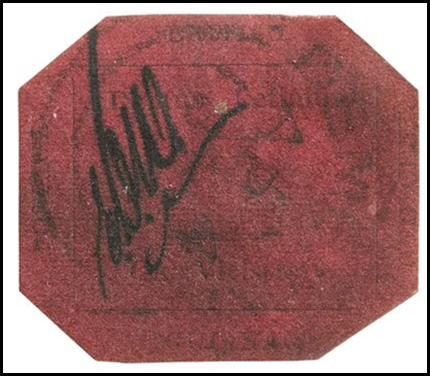
British Guiana One-Cent Magenta postage stamp from 1856, the only one of its kind to still exist, sold for a record $9.5 million at Sotheby's on Tuesday.

The long awaited British Guiana stamp was auctioned yesterday in New York. Here is the detailed report  of this auction !!

image

The 1856 British Guiana One-Cent Magenta sold at auction on Tuesday 17th June 2014 at Sotheby's in New York for 9.5 million dollars (£5.6m). It is the fourth time it has broken the auction record for a single stamp in its long history.

image

The stamp was expected to bring 10-20 million dollars (£5.9-£11.8m). Sotheby's said the buyer wished to remain anonymous. The price included the buyer's premium.

David Redden, Sotheby's vice chairman, called the sale "a truly great moment for the world of stamp collecting".

"That price will be hard to beat, and likely won't be exceeded unless the British Guiana comes up for sale again in the future," he said.

Measuring one by one and a quarter inches, the One-Cent Magenta has not been on public view since 1986 and is the only major stamp absent from the Royal Family's private Royal Philatelic Collection.

"You're not going to find anything rarer than this," said Allen Kane, director of the Smithsonian National Postal Museum. "It's a stamp the world of collectors has been dying to see for a long time."

An 1855 Swedish stamp previously held the auction record for a single stamp. It sold for 2.3 million dollars (£1.3m) in 1996.

David Beech, long-time curator of stamps at the British Library, who retired last year, has compared it to buying the "Mona Lisa" of the world's most prized stamps.

The last owner was John du Pont, an heir to the du Pont chemical fortune who was convicted of fatally shooting a 1984 Olympic champion wrestler. The stamp was sold by his estate, which will designate part of the proceeds to the Eurasian Pacific Wildlife Conservation Foundation that du Pont championed.

Printed in black on magenta paper, it bears the image of a three-masted ship and the colony's motto, in Latin: "We give and expect in return."

It went into circulation after a shipment of stamps was delayed from London and the postmaster asked printers for the Royal Gazette newspaper in Georgetown in British Guiana to produce three stamps until the shipment arrived: a one-cent magenta, a four-cent magenta and a four-cent blue.

While multiple examples of the four-cent stamps have survived, only the tiny one-cent issue is known to exist today.

Its first owner was a 12-year-old Scottish boy living in South America who added it to his collection after finding it among family papers in 1873. He soon sold it for a few shillings to a local collector, Neil McKinnon.

Mr McKinnon kept it for five years before selling it to a Liverpool dealer who recognised the unassuming stamp as highly uncommon. He paid £120 for it and quickly resold it for £150 to Count Philippe la Renotiere von Ferrary, one of the world's greatest stamp collectors.

Upon his death in 1917, the count bequeathed his stamp collection to the Postmuseum in Berlin. The collection was later seized by France as war reparations and sold off in a series of 14 auctions with the One-Cent Magenta bringing 35,000 dollars (£20,700) in 1922 - an auction record for a single stamp.

Arthur Hind, a textile magnate from Utica, New York, was the buyer. King George V was an under-bidder.

After Mr Hind's death in 1933, the stamp was to be auctioned with the rest of his collection until his wife brought a lawsuit, claiming it was left to her.

The next owner was Frederick Small, an Australian engineer living in Florida who purchased it privately from Mr Hind's widow for 45,000 dollars (£26,600) in 1940. Thirty years later he consigned the stamp to a New York auction where it was bought by an investment consortium for 280,000 dollars (£165,680) - another record.

The stamp set its third record in 1980 when it was sold for 935,000 dollars (£553,254) to du Pont.

Read More…

A ONE-CENT STAMP FOR MILLIONS OF DOLLARS


image


In 1840, Great Britain issued the world’s first adhesive stamp. The prices of specimens issued between then and the early twentieth century are generally on the rise. Among them, the one-cent magenta is perhaps the world’s most coveted stamp. As Sotheby’s tells it, in the mid-nineteenth century, the colonial postal system of British Guiana, in South America, relied on stamps imported from England. In 1856, though, a delayed shipment prompted the Guianan postmaster to seek a local supplier. The Royal Gazette newspaper, using a hand press capable of printing just two stamps at a time, was commissioned to produce stamps known as the four-cent blue, the four-cent magenta, and the one-cent magenta. Four cents was the price of a letter; one-cent stamps were used on the wrapping of newspapers, like the Royal Gazette itself. The stamps were so crude that the postmaster initialled each one, to certify that it wasn’t a fake.

People often saved letters and the envelopes in which they arrived, but newspaper wrapping was a different matter—hence the one-cent magenta’s rarity. In 1873, a twelve-year-old Scottish schoolboy named L. Vernon Vaughan, who lived with his family in British Guiana, discovered a one-cent magenta among his uncle’s letters. He sold it for a few shillings, and it eventually made its way into the hands of a rich Austrian count named Philip Ferrari de La Renotière, one of history’s great stamp collectors. The Count bequeathed his collection to Berlin’s Postal Museum, but its repose there was short-lived; after the First World War, according to Sotheby’s, it was seized by France and auctioned in 1922 to help pay Germany’s war reparations. That was how it came to be acquired by the American textile magnate Arthur Hind, for thirty-five thousand dollars (nearly five hundred thousand dollars in today’s money), a record price at the time.

According to a delectable legend that there is no reason to believe, when a second one-cent magenta came into Hind’s possession, he torched it with his cigar to protect the value of the one he already had. Since then, the stamp’s fame has grown: it was featured in a Donald Duck short and a John D. MacDonald mystery. John du Pont, an heir to the DuPont chemical fortune, bought it for nine hundred and thirty-five thousand dollars in a 1980 auction (in today’s dollars, nearly $2.7 million), setting another record. He later died in prison, while serving time for murdering an Olympic wrestler. Sotheby’s  handled the current sale for his estate.

Read More…

Chủ Nhật, 15 tháng 6, 2014


image

Date of Issue : 11 June 2014

Chunghwa Post ( Taiwan) is issuing  set of four stamps, featuring Foeniculum vulgare, Perilla frutescens, Lavandula angustifolia, and Ocimum basilicum. These four fragrant herbs are extensively used for flavoring and medicinal purposes. The designs follow:

1. Foeniculum vulgare (NT$3.5): A perennial herbaceous plant of the family Apiaceae, it is known for its yellowish green, pinnate and finely dissected leaves. Its flowers are a delightful yellow.

2. Perilla frutescens (NT$5): A perennial herbaceous plant of the family Lamiaceae, it has heart-shaped leaves, with serrate edges. Its flowers are dark pink in color. The plant is reddish purple throughout.

3. Lavandula angustifolia (NT$12): A woody plant of the family Lamiaceae, the edge of the leaf is smooth. Younger, newer leaves are covered in dense white tomentose hairs, which would fall off as the leaves age, and their green tint become visible. The flowers are blue, pinkish or white.

4. Ocimum basilicum (NT$25): A perennial herbaceous plant of the family Lamiaceae, the surface of its leaves is either smooth or slightly puckered. The flowers are white or pinkish.

Club News

World's most valuable stamp to go under the hammer


image

The British Guiana One-Cent Magenta, which is billed as the 'world’s most famous stamp, will go on sale on June 17.

158-year-old stamp which is one of the rarest stamps of the world, British Guiana One-Cent Magenta  is in the news these days as it is expected to fetch $20 million in 17th June auction at Sotheby's New York .

The Unique British Guiana 1856 One-Cent stamp, printed on magenta surface-colored paper, is currently on display at the exclusive auction house's London branch before going on sale in the US on June 17.

Billed as ‘the world's most valuable stamp', the piece was first purchased either on or before April 4, 1856. It was discovered by 12-year old schoolboy Louis Vernon Vaughan in 1873, as part of his uncle's stamp collection.

It was sold later that year and turned up in Paris in 1878 before being passed on to Austrian nobleman Count Philippe la Renotiere von Ferrary, a famous stamp collector. In 1922 ‘the world's rarest stamp' was sold for a record amount of $32,500.

It went under auction again before finally breaking a new record in 1980, when John E. du Pont paid $935,000. The iconic talisman is now returning to the market, and Sotheby's predicts that it will sell for anywhere between $10 million and $20 million.

Read More….


Errors Get the Stamp of Approval

By Shampa Dhar Kamath

They used to say the most interesting thing about a postage stamp was the persistence with which it stuck to its job. I would say the perseverance with which it clings to life is even more remarkable.

Reports of the death of philately appear to be greatly exaggerated. Stamp collecting as a hobby is floundering for sure, but dying, apparently not. After June 17, it could be most definitely not. That’s the day a 158-year-old stamp from British Guiana goes under the hammer at a Sotheby’s auction in New York. The ‘Unique One-Cent Magenta’ has done the auction circuit before: it sold in 1922 for the then record amount of $32,500 and in 1980 for $935,000. This time, Sotheby’s expects it to fetch between $10 million and $20 million.

A printing mistake in publishing can cost you your job. In the world of stamps, it simply gets you more money. Consider the Swedish Treskilling Yellow, which has become one of the world’s most precious bits of paper just because it is in the wrong hue. (A normal three-skilling stamp in Sweden should be blue-green; this one was erroneously printed in yellow). The stamp sold in Zurich in 1996 for $2.3 million; it exchanged hands for a larger sum last year but all the auctioneer would say is that the buyer believes it to be a “solid investment in these turbulent times”.

Not all stamps have that exciting a career graph, but that doesn’t seem to affect 60 million people around the globe from collecting them. At last count, 200 countries were still issuing stamps and at least 9,000 new ones were being printed every year. India can lay claim to at least 60 sets of those, with many of our sets containing more than just one coloured bit of paper.

Not that it’s just about collecting— analysts say stamps are among the top four investments of the 20th century and produce an average return of 11 per cent per annually. Like everything else, many of the new stars—both stamps and their collectors—come from China. A set of 1967 stamps featuring Mao Zedong greeting crowds with quotes from his Little Red Book is already worth $53,000.

But India is not completely out of the picture. By making our own share of printing errors, we’ve managed to enter the history books too. There’s a four-anna stamp from British India, with Queen Victoria’s head printed upside down. That error is worth at least Rs 1 crore today. A stamp from a 1948 set of Rs 10 stamps bearing the picture of Mahatma Gandhi, with the word ‘service’ stamped across his chest, sold in 2011 for $205,000 (Rs 1.2 crore at today’s rate).

Those who can’t afford such errors may like to take up India Posts on its ‘My Stamp’ offer. For a while now, the department has been offering individuals the facility to convert their personal photographs into legally-valid stamps. All you need to do is show up at the post office carrying valid identification papers and a good-quality photograph of yourself. You will be handed a selection of backgrounds to choose from—such as flowers, zodiac signs, flowers, wildlife—to use alongside your picture. Choose whichever visual you like best, cough up Rs 300 and, voila, your face can be the stamp on the next letter you post.

They say the President of today is the postage stamp of tomorrow. Maybe your career could go in reverse.

Read More…

nghe nhạc trực tuyếnNấu món chay | học nấu ăn DJ - Ảnh đẹp | xalotinnhanh